Steel, Stories, and Secrets: The Real-World DNA Behind TDU's Most Legendary Rides
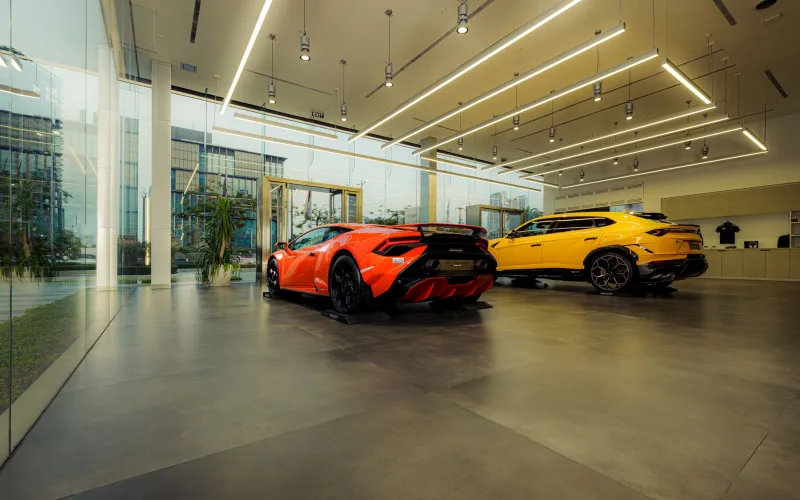
Most of us picked up Test Drive Unlimited for the freedom — that intoxicating promise of open roads, exotic hardware, and the kind of automotive fantasy that no real-world bank account could ever fund. But somewhere between the first time you slid a Lamborghini Murciélago through a Hawaiian hairpin and the moment you parked a Bugatti Veyron outside a virtual Ibiza villa, you might have wondered: why these cars? Why this specific roster? Why does cruising in certain vehicles feel almost cinematic, like there's a story attached?
Turns out, there is. Several, actually. And the developers — whether by design or happy accident — left breadcrumbs scattered throughout the franchise that point to a far richer automotive mythology than the garage menus ever let on.
The Bugatti Veyron and the "Impossible Car" Narrative
When TDU launched in 2006, the Bugatti Veyron was barely a real thing. It had only entered production the previous year, and most American car enthusiasts knew it primarily as a concept whispered about in magazine features. Atari and Eden Games didn't just license it for clout — they were making a statement.
Internal developer commentary (later surfaced through fan archival projects) suggests the Veyron was deliberately positioned as the game's "final boss" vehicle. Early design documents reportedly described it not as a car you'd drive daily in-game, but as a reward — something that should feel earned. The decision to make it purchasable but financially brutal was intentional. It was meant to represent the ceiling of the game's world, the point where the road and the dream converge.
The real-world inspiration goes deeper, too. The Veyron's development famously cost Volkswagen Group billions more than it ever recouped in sales. It was an engineering exercise in proving something was possible, not profitable. That philosophical underpinning — doing something extraordinary simply because you can — maps almost perfectly onto TDU's core identity as a game that existed to say "yes" to automotive excess.
The Shelby Cobra and America's Chip on Its Shoulder
For US players especially, the Shelby Cobra's inclusion in the series carries a particular weight. Carroll Shelby's creation was born out of a very American impulse: take a lightweight British chassis, stuff an absurdly powerful Ford V8 into it, and embarrass the Europeans at their own game. Sound familiar? That's essentially the founding myth of American motorsport culture.
What's fascinating from a lore perspective is how the franchise handles the Cobra's legacy differently across its entries. In the original TDU, the AC Cobra (licensed under its British identity in some regions) sits in a peculiar middle ground — it's not the fastest, not the most luxurious, but it commands a specific kind of respect from players who understand what they're looking at. Community veterans on forums have long noted that the Cobra's handling model felt deliberately raw compared to contemporaries, almost like the developers were nodding to its unfiltered, analog character.
There's also a quiet easter egg that dedicated players have pointed to for years: the garage positioning of the Cobra in certain TDU builds places it adjacent to vehicles it historically raced against in period-correct motorsport. Coincidence? Maybe. But Eden Games had automotive consultants on staff, and nothing about that roster was random.
Ferrari's Conspicuous Absences — and What They Reveal
Here's where it gets genuinely interesting. Ferrari's famously restrictive licensing policies have shaped the TDU series in ways that go beyond simple roster gaps. When Ferrari pulls out of a game — or declines to participate — the developers have to make choices about how to fill that void. And those choices tell you a lot about how the team understood their own world.
In TDU Solar Crown, the absence of certain Prancing Horse models pushed the spotlight toward Lamborghini, Pagani, and Koenigsegg in ways that arguably gave those manufacturers more narrative space than they'd typically receive. Pagani in particular — a small, obsessive Italian manufacturer with a deeply romantic origin story — feels almost thematically perfect for TDU's DNA. Horacio Pagani built his company on the belief that a car should be a work of art first and a machine second. That's not a bad mission statement for a franchise that's always been as much about atmosphere as acceleration.
Long-time community members have theorized that the developers leaned into these gaps creatively, essentially building the roster around stories rather than pure brand prestige. Whether or not that's provably true, it's hard to argue with the result.
The McLaren F1 and the Ghost of Perfection
Few vehicles carry more mythological weight in automotive culture than the McLaren F1. Designed by Gordon Murray as the definitive expression of what a road car could be, it held the production car speed record for over a decade. Its three-seat layout — driver centered, passengers flanking — is one of the most distinctive design decisions in automotive history.
When the F1 appears in TDU, it doesn't just show up as another tick on a spec sheet. Community researchers have documented that the F1's in-game model across various franchise entries contains subtle details — the central driving position reflected in cockpit camera angles, the characteristic engine note tuned closer to the real car than almost any other vehicle in the roster — that suggest someone on the development team was genuinely passionate about getting it right.
The F1 also functions as a kind of philosophical anchor for the series. It predates the era of active aerodynamics, traction control systems, and digital driver aids. It's a car that demands respect and punishes complacency. In a franchise that often rewards patience and mastery over brute aggression, that feels intentional.
Why Any of This Matters
You might be asking yourself why a gaming site is spending this much time on automotive history. Fair question. But here at TDUSC Origins, we've always believed that understanding why the world is built the way it is makes you a better, more connected player. When you know that the Veyron was a developer's deliberate "final frontier," cruising past it in free roam hits differently. When you understand the Cobra's cultural defiance, throwing it into a corner feels like participating in something bigger than a race.
The cars in this franchise aren't just vehicles. They're arguments — about what driving means, what freedom looks like, and what we're willing to dream about when the open road stretches out ahead of us.
Next time you're browsing the in-game dealership, take a second before you just chase the highest top speed. There's a story in every garage bay. You just have to know where to look.