Twenty Years, One Island: Taking the Long Way Home on TDU's Original O'ahu
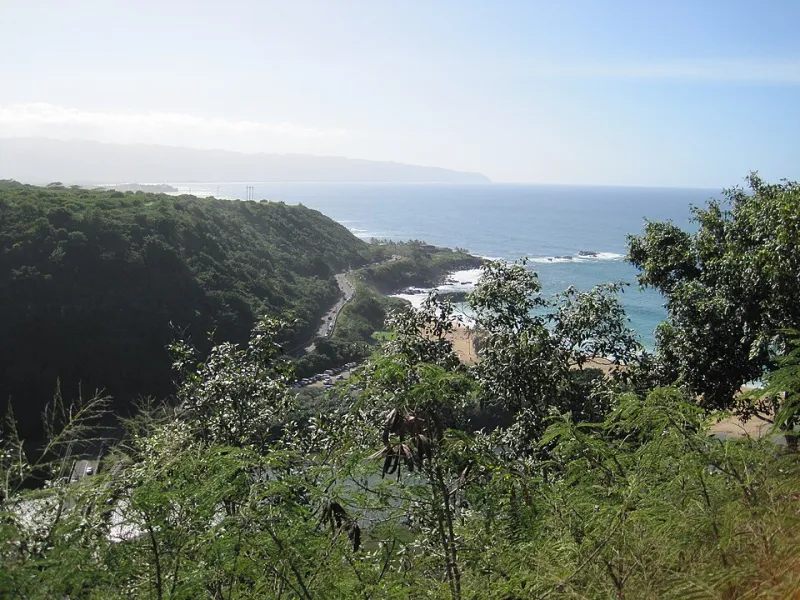
Photo: Joel Bradshaw, Public domain, via Wikimedia Commons
Twenty years is a weird amount of time in video games. Long enough for a map to become memory. Short enough that you can still hear the radio jingle when someone says North Shore. Test Drive Unlimited first put players on O'ahu in 2006, and in 2026 the anniversary does not need a remaster or a statue. It needs a drive.
So I took one. No fast travel, no race marker, no goal beyond the loop itself. Just a car with enough horsepower to be fun and enough restraint to keep me out of the ocean. The route started at the airport, slipped through Waikiki, climbed past Diamond Head, cut through the Pali tunnels, and then unfolded along the windward coast before swinging north to Sunset Beach and back through Haleiwa. It was not the fastest way around the island. That was the point.
The Route That Still Feels Like Home
If you have played TDU for long enough, the island stops being a menu of events and becomes a set of rhythms. Freeway speed. Coastal cruise. Tight mountain switchback. A little strip of town where you accidentally brake for nothing because the light is red and the radio is good. The anniversary drive works because it refuses to optimize any of that.
My loop was simple. Start near Honolulu, head east toward Diamond Head, then take the Pali Highway over to Kaneohe. From there, follow the coast up through Kualoa, Kahana, and the North Shore. Stop when the view gets rude. Keep going when the road opens up. Finish with the long central run back toward town, because every good cruise needs a decompression lap.
It is not a secret route. It is not a speedrun. It is the kind of drive that reminds you why the original map mattered before every open-world racer started stuffing icons into the sky.
Lesson One: Landmarks Beat Waypoints
Modern open-world racers are brilliant at convenience. They will paint a line on the road, drop a marker on the horizon, and tell you exactly how many feet remain before the next dopamine hit. TDU did some of that too, but the original O'ahu was legible in a different way. You learned the island by looking at it.
Diamond Head tells you where you are. The Pali tunnels tell you the map is about to change. The North Shore tells you to stop pretending you are in a hurry. That kind of navigation ages well because it lives in your head instead of a menu. Twenty years later, I can still drive large chunks of that island without checking the minimap. That is not just nostalgia. That is design.
Lesson Two: Road Variety Is Content
The original TDU map was not packed with stunt ramps, billboards, and collectible nonsense every twelve feet. It had roads. Different roads. A freeway that felt like a freeway. A coastal two-lane that made you want to roll the windows down in a game that did not have windows to roll down. Mountain passes that punished sloppy braking. Little town grids that forced you to pay attention again.
That variety created rhythm. You were not always in attack mode. You were not always cruising. The island kept changing the question. Modern racers often give us more stuff per square mile, but less of a sense that the world has its own tempo. TDU's O'ahu still feels like a place you travel through, not a playground you consume.
Lesson Three: The Quiet Parts Matter
Maybe the most old-school thing about the original TDU is how comfortable it was with downtime. You could drive for ten minutes without a race starting. You could listen to a radio station, watch the sun drop behind the mountains, and decide that today's goal was simply to own a nicer house by the water. The game did not panic if you were not being productive.
That sounds small until you compare it to the modern open-world racer, where something is always chirping at you. A challenge. A leaderboard. A seasonal event. A notification that your friend just beat your time by four tenths. All of that is fine, but it can flatten the mood. TDU let the island breathe. In 2026, that feels less like a limitation and more like a design virtue.
Lesson Four: Scale Without Noise
O'ahu in TDU is not a one-to-one recreation, but it understands the assignment. It feels big enough to matter. The distances have weight. You remember the drive to the North Shore because it took a minute. You remember the airport because it was a real starting point, not just a spawn menu.
The Crew Motorfest also uses O'ahu, and Forza Horizon has spent years perfecting the festival-map formula. Both are great at what they do. But the original TDU still stands as a reminder that scale is not just square mileage. It is how much the world makes you feel the trip. A map can be dense and still feel small. A map can be quiet and feel enormous.
The Anniversary Invite
So here is the ask. Sometime this month, boot up the original O'ahu if you still can, or just trace the route in your head if you cannot. Take the long way. Skip the race. Stop at the overlook. Let the radio do its thing.
Then tell us the route that still feels like home. The road you take when you are not chasing a time. The corner you always get wrong. The stretch where you always turn the music down because the engine sounds better than the DJ. Twenty years on, TDUSC Origins is still here for the same reason you are: because some digital roads never really leave the map.