Beats Behind the Wheel: How TDU's Radio Dial Became Your Competitive Edge
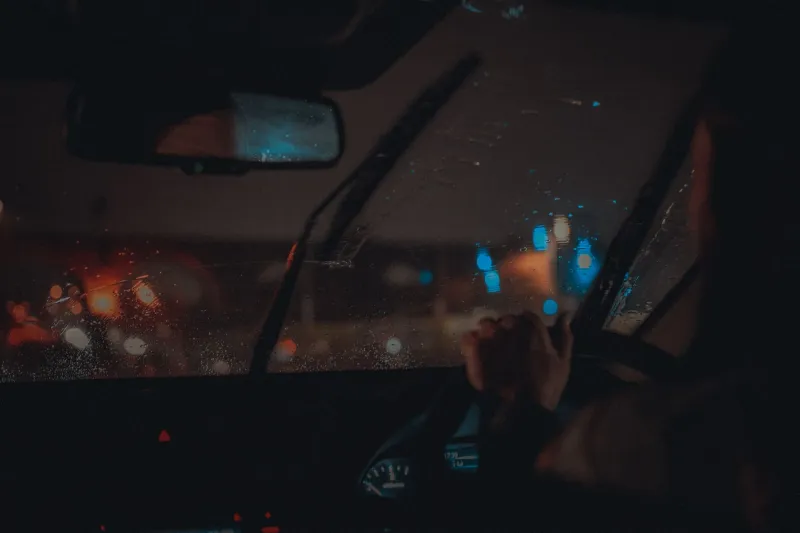
There's a moment every serious TDU player remembers. You're lined up at the start of a brutal race, the kind where you've already lost three times and your patience is running thin. You flick through the radio stations almost out of habit—and then that song comes on. Suddenly your posture changes. You grip the controller a little tighter. The race hasn't started yet, but your head already has.
That's not an accident. That's game design working exactly as intended.
More Than Background Noise
A lot of racing games treat music like wallpaper. It's there to fill the silence, to give the sound engineers something to do, to check a box on the feature list. TDU took a different approach. The radio stations in Test Drive Unlimited—and later in Solar Crown—were curated with a specificity that felt almost personal. Different stations carried different energy, and veteran players quickly figured out that your station choice was less about preference and more about performance.
The electronic and house-heavy stations had a particular effect on the competitive mindset. The steady, building tempo of that genre mirrors something real in human psychology—it's the same reason athletes put on hype playlists before competition. Your heart rate syncs to rhythm whether you want it to or not. When the beat dropped mid-straightaway, your foot instinctively pressed harder on the accelerator. That's not a coincidence. That's your nervous system responding to audio cues the same way it would in any high-stakes environment.
But here's what made TDU's approach genuinely interesting: the music wasn't one-dimensional. Not every player wanted to be wound up tight. Some of the most skilled racers on the island were the ones who played it ice cold, spinning the dial to something smoother and slower, keeping their pulse steady while everyone else was running hot. The variety of stations essentially let you choose your psychological state before you competed.
The Grinding Hours and the Songs That Carried Them
If you put serious time into TDU—and real fans absolutely did—you know that a huge portion of that time wasn't spent racing. It was spent driving. Cruising from one dealership to the next, hunting for that one car you needed to complete a collection, winding through the hills of Oahu at two in the morning because you hadn't unlocked that last property yet.
Those grinding hours had their own soundtrack, and the emotional texture of those songs became permanently fused with specific memories. There are players right now who can hear a particular track and immediately visualize a stretch of highway in TDU—the color of the sky, the car they were driving, the specific version of themselves they were at that moment in their life. Music does that. It timestamps experience in a way that visuals alone can't.
The slower, more atmospheric stations earned their reputation during those long drives. They turned what could have felt like a chore into something genuinely meditative. The world felt bigger. The freedom felt more real. And paradoxically, those calm stretches often made the competitive races hit harder when they finally arrived—because the contrast was so sharp.
Station Selection as Player Identity
In the TDU community, your go-to station became a kind of personality marker. It's similar to the way real car culture works in the US—what you drive, what you play, what you wear to a car meet all communicate something about who you are and where you fit in the ecosystem. TDU players picked up on this instinctively.
The players who were always on the electronic stations tended to be the aggressive, momentum-driven racers. They wanted every session to feel like a main event. The ones who preferred the more laid-back channels were often the collectors, the explorers, the folks who cared as much about the journey as the destination. Neither approach was wrong. Both produced elite players in their own way.
What's fascinating is that this wasn't a mechanic the developers explicitly designed around player archetypes—it emerged organically from giving players a genuine choice and letting them build habits around it. The music became a ritual. And rituals, in competitive gaming just as in professional sports, are powerful things.
The Songs You'll Never Forget
Ask any long-time TDU fan about a specific moment in the game and there's a better-than-average chance they'll mention what was playing. Not what car they were in. Not what road they were on. What was playing. That's the mark of a soundtrack that actually did its job.
The games that get music right—and TDU absolutely belongs in that conversation—understand that audio isn't decoration. It's immersion infrastructure. It's the thing that convinces your brain this fictional world is worth caring about, worth investing in, worth coming back to night after night.
For a generation of American racers who grew up with TDU, those radio stations were the score to a chapter of their lives. The competition was real, the community was real, and the music was the connective tissue that held it all together. You can rebuild the roads, restock the dealerships, and repopulate the lobbies—but recreating the feeling of that specific song coming on at exactly the right moment?
That's the kind of thing you can't patch in later. You either built it from the start, or you didn't build it at all.