Rich But Restless: Why a Full Bank Account in TDU Never Felt Like Enough
There's a specific kind of hollow feeling that every serious TDU player knows. You've swept the leaderboards. Your bank balance has more zeros than you can count on one hand. The race calendar is basically a formality at this point. And yet, you boot up the game on a Saturday morning, cruise down a sun-drenched Hawaiian highway, and something nags at you. The garage behind you feels wrong. Not empty — just wrong.
That feeling wasn't a bug. It was the whole point.
Winning Was Easy. Meaning Was the Hard Part.
Test Drive Unlimited was deceptively straightforward when it came to its competitive loop. Race, win, collect money, buy faster cars, race better. Rinse, repeat. On paper, that's a clean progression system — the kind of thing any game designer could diagram on a whiteboard in ten minutes.
But somewhere in the execution, the developers at Eden Games built something more psychologically complicated than a simple reward ladder. The game's economy was generous enough that a dedicated player could reach financial comfort relatively quickly. And once you got there, the racing itself — the actual core mechanic — started to feel strangely beside the point.
That's not a criticism. That's brilliant design.
By making competitive success accessible, TDU forced players to confront a question the game itself refused to answer: okay, you won — but who are you? The leaderboard didn't tell you. Your bank balance definitely didn't. The only thing that came close to answering it was the collection sitting in your garage.
The Garage as a Mirror
In most racing games, your car collection is a means to an end. You buy the Ferrari because it goes faster than the Honda. You upgrade it because upgrades equal wins. The car is a tool.
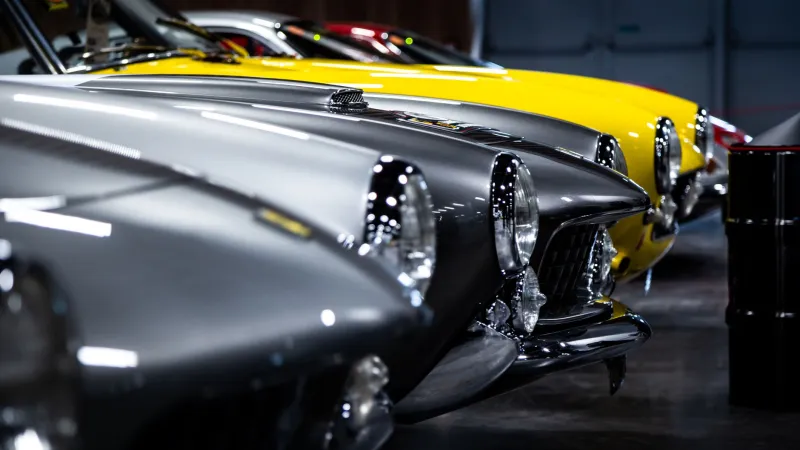
TDU treated cars more like personality traits. The game's roster was wide enough — covering everything from blue-collar muscle to European exotica to Japanese precision machines — that your choices said something about you. Not in some cheesy, marketing-copy way, but in the genuine sense that two players with identical bank balances could walk into the same dealership and walk out with completely different identities.
One player filled their garage with raw American horsepower. Another curated a rotating collection of British GT cars. Someone else went deep on convertibles because they just loved the way the wind physics worked on Oahu's coastal roads. None of those approaches were mechanically superior. But each one felt theirs.
That sense of ownership — real ownership, not just financial transaction — is what separated players who logged hundreds of hours from players who bounced after a few weeks. The ones who stayed weren't grinding for money. They were building something.
The Endgame Loop Nobody Talked About
Here's what's interesting about TDU's design philosophy when you look at it from the outside: the game never explicitly told you to curate a meaningful garage. There was no quest marker pointing to "personal identity." No achievement that unlocked when your collection finally felt right.
The pressure was entirely internal. And that's incredibly rare in gaming, even today.
Modern open-world titles are obsessed with extrinsic motivation — battle passes, daily challenges, seasonal rewards, FOMO mechanics that herd players toward specific behaviors. TDU, by contrast, handed you a pile of money and a map and basically said figure it out. The endgame wasn't a raid or a final boss. It was a conversation you had with yourself about what you actually valued.
For American players especially, that resonated. Car culture in the US has always been tied to identity in ways that go beyond transportation. The car you drive says something about where you're from, what you care about, who you want to be seen as. TDU digitized that dynamic and let it breathe inside a virtual Hawaii.
Why the "Best" Garage Didn't Exist
One of the quiet geniuses of TDU's design was that it resisted the temptation to create an objectively correct endgame collection. There was no single car so dominant that every serious player needed it. There was no "God tier" garage that the community universally agreed on as the pinnacle.
That ambiguity was a gift. It meant that two players could sit down and debate their collections for hours — not because one of them was wrong, but because they were working from fundamentally different definitions of success. The guy with the Lamborghini Murciélago wasn't playing a different game than the guy with the Shelby Cobra. They were just writing different stories.
And that's ultimately what TDU's endgame loop was about. Not domination. Not completion. Story.
The Lesson That Stuck
Years later, when players talk about their TDU memories, they rarely lead with race wins. They talk about the first time they bought a car they'd always dreamed about. They talk about that one Sunday-morning cruise where the lighting was perfect and the road was empty. They talk about finally finding the right combination of cars that made their garage feel complete.
The victories faded. The collections stuck.
There's something genuinely worth sitting with in that observation — not just as a design lesson, but as a statement about what games can be when they trust players enough to define their own finish lines. TDU understood that the millionaire's dilemma isn't really about money at all. It's about the gap between having everything and meaning something.
Most games try to close that gap with more content. TDU closed it by asking better questions.