Island Imprinted: The Strange Science of How TDU Burned Its Roads Into Players' Brains
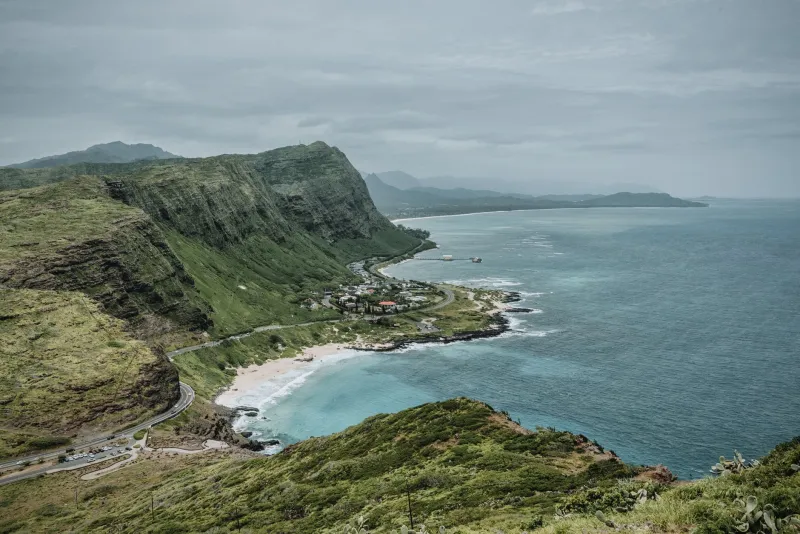
Something unusual happens when you spend enough hours inside TDU's version of Hawaii. The roads stop feeling like a game map and start feeling like somewhere you actually know. The curve before the long downhill on the north shore. The junction where three routes converge near the coast. The subtle rise in elevation that signals you're about to crest into a new section of the island.
Players who logged serious time with TDU didn't just memorize routes — they internalized the island in a way that blurs the line between game knowledge and genuine spatial memory. And the more you dig into how that happened, the more it reveals about what made TDU's open world design so quietly extraordinary.
How the Brain Maps a Virtual World
Spatial memory — the mental system we use to navigate and remember physical environments — isn't picky about where its information comes from. Research in cognitive psychology has consistently shown that the brain processes virtual environments using many of the same mechanisms it uses for real spaces. The hippocampus, which plays a central role in spatial navigation, activates during video game exploration in ways that closely mirror its activity during real-world movement.
What this means practically is that time spent navigating TDU's roads wasn't just game time. It was, in a meaningful neurological sense, practice navigating a real place — or at least a place real enough for the brain to treat seriously.
TDU leaned into this harder than almost any racing game before it by committing to a genuine recreation of Oahu's road network. The developers mapped actual Hawaiian roads, and while the game's version was obviously compressed and adapted, the underlying geography tracked closely enough that players were essentially learning a real island's spatial logic. That's a very different experience from racing on a fictional track or a stylized fantasy environment.
The Landmarks You Never Forgot
Ask longtime TDU players what they remember most vividly, and you'll almost always get landmarks before routes. The specific building that marked a critical turn. The stretch of coastline that signaled you were approaching a major junction. The gas station or hotel that meant you'd overshot a particular shortcut.
This is classic spatial memory at work. We don't navigate by memorizing sequences of turns — we navigate by building mental maps anchored to recognizable features. TDU players built those mental maps without realizing they were doing it, simply by driving the same roads repeatedly in pursuit of race wins and exploration achievements.
The interesting thing is how durable those memories proved to be. Players who haven't touched the game in years can often still describe specific sections of the map in detail — not just major highways but secondary roads, coastal paths, the mountain routes that most players ignored in favor of faster alternatives. That kind of retention suggests the memories were encoded deeply, the way genuinely meaningful experiences tend to be.
When the Virtual Map Met the Real Island
Here's where TDU's geography becomes genuinely fascinating. A number of players who later visited Oahu in real life reported something that sounds almost impossible: moments of recognition. Not just general familiarity with Hawaiian scenery, but specific road-level recognition — a curve, a stretch of coastline, a hillside profile that matched something stored in their TDU mental map.
This isn't universal, and the game's compression of the island means many areas don't translate directly. But the phenomenon is real enough that it's become part of TDU community lore. Players planning Hawaii trips have used their game knowledge as a rough orientation tool, noting which areas felt familiar and which had been significantly altered or simplified in the game's version.
For American players especially — many of whom had never visited Hawaii and might not have had a concrete mental image of Oahu's geography — TDU essentially provided a spatial foundation. The island wasn't just a game setting. It was, for many players, their first real encounter with Hawaiian geography in any meaningful detail.
The Navigation Skills That Went Everywhere
Beyond Hawaii specifically, TDU players consistently describe a broader sharpening of navigation instincts. The game's design actively discouraged passive GPS dependence. You could use the map, but the most efficient players learned to internalize routes rather than constantly pause to check their position. Over hundreds of hours, that habit built something.
Multiple veteran players describe noticing an improvement in their real-world navigation comfort after heavy TDU periods — a greater willingness to drive unfamiliar roads without anxiety, a better intuition for estimating distances and route alternatives, a quicker ability to build a mental model of a new area. Whether that's a direct transfer from the game or just a general byproduct of paying close attention to road environments is hard to say, but the pattern shows up often enough to be interesting.
One player put it memorably: TDU taught him to treat every road like it might matter later. That's not a bad instinct to carry around.
The Map as a Living Document
What made TDU's island feel so memorizable wasn't just its size or its fidelity to real geography. It was the way the game rewarded exploration over time. New routes revealed themselves with familiarity. Shortcuts that looked impossible on first inspection became obvious after enough passes. The island rewarded the players who treated it like a place to understand rather than a backdrop to race across.
That design philosophy created a different relationship between player and map than most racing games offer. You weren't just learning where to go. You were developing a relationship with a specific place — its rhythms, its personalities, its secrets.
Years later, that relationship is still intact for a remarkable number of players. The island is still in there, road by road, landmark by landmark, waiting for the right trigger to surface. That's not just good game design. That's the kind of thing that only happens when a virtual world is built with enough care to feel genuinely real.