Off the Beaten Path: Secret Routes and Shortcuts That Separate TDU Legends from Tourists
Here's a truth that every competitive TDU player eventually figures out: the fastest line isn't always the obvious one. The GPS will route you along the main highway. The minimap will point you toward the widest road. And if you follow both of them religiously, you'll finish exactly where you belong—behind the people who didn't.
Map knowledge in TDU was never just a navigation skill. It was prestige. It was the difference between a player who bought a fast car and a player who knew the island. This guide is for the latter group—and for anyone who wants to join them.
Why Route Knowledge Mattered More Than Horsepower
Before we get into specifics, it's worth understanding why shortcuts carried so much weight in TDU's ecosystem. Unlike a traditional circuit racer where every competitor runs the same fixed track, TDU's open-world races gave drivers a start point, an end point, and—crucially—a choice about what happened in between. The game wasn't just testing your reflexes. It was testing your knowledge.
A driver in a slightly slower car who knew an alternate route through a less-trafficked stretch of road could absolutely take down someone in a supercar who was blindly following the suggested path. That dynamic created something rare in racing games: genuine strategic depth. The island itself became a skill ceiling, and clearing it required time, curiosity, and a willingness to go off-script.
The Coastal Cuts That the GPS Ignored
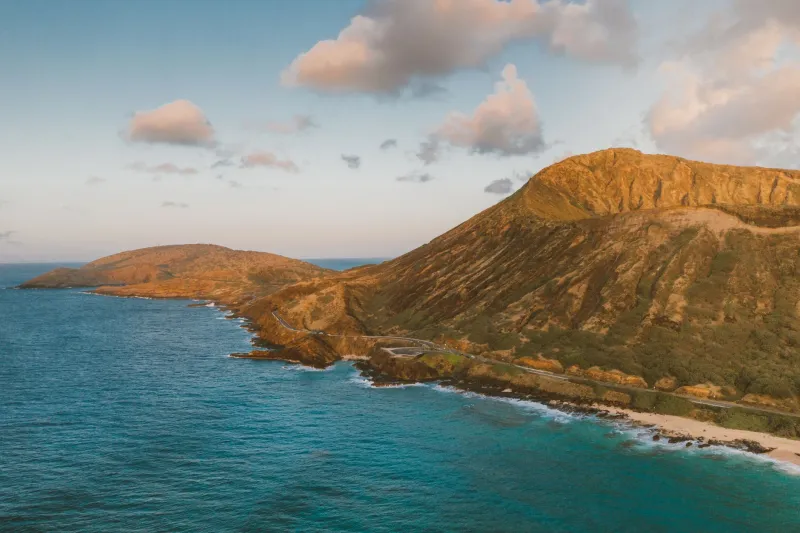
Oahu's coastline in TDU is gorgeous and, more importantly, full of narrow side roads that most players dismiss as decorative. Don't. Several of these coastal cuts run parallel to the main highway stretches and, while they're tighter and less forgiving, they're significantly less congested with AI traffic.
The trick with coastal alternatives is understanding their tradeoff. You're trading width and predictability for a cleaner run without the rubber-banding chaos of NPC vehicles. For players with tight car control—especially those running lower-powered sports cars rather than raw exotics—these routes consistently delivered better race results than the obvious main road.
The northwest stretch of the island, in particular, had a few of these parallel options that veteran players quietly hoarded like trading secrets. If you ever raced someone online and watched them disappear from your radar only to reappear ahead of you at the next checkpoint, there's a decent chance they were running one of these cuts.
The Inland Passes and When to Use Them
The interior of TDU's map gets underutilized by casual players for an understandable reason: it looks slower on paper. Tighter roads, elevation changes, less straight-line potential. But elevation is a tool, not an obstacle, if you know how to use it.
Several inland routes through the hills create natural momentum sections where a well-timed descent can carry you out of a corner faster than any flat road alternative. The physics in TDU rewarded this kind of topographical awareness. Gravity was your co-driver if you let it be.
The key to using inland passes effectively was car selection and setup. High-downforce builds that struggled to maintain speed on flat roads would often thrive on hilly interior routes because the added mechanical grip helped through the technical sections. This was one of those layers of depth that rewarded players who actually thought about the relationship between their car and the terrain rather than just buying whatever had the highest top speed stat.
Property Routes: The Drives Nobody Talked About
One of TDU's most underappreciated features was its network of properties—houses and villas scattered across the island that served as garage locations. The routes to those properties, especially the more remote ones, were often the best driving roads in the game. And because most players only drove them during the purchase run and never again, they stayed relatively unexplored in competitive discussions.
A handful of these property access roads cut through areas of the map that standard race routes never touched. For players willing to run custom point-to-point challenges with friends, these stretches offered some of the most technically demanding and visually rewarding driving in the entire game. The community members who discovered this tended to keep it close to the chest—it became a marker of genuine map mastery.
The Meta-Skill Nobody Talks About: Traffic Reading
Shortcuts and alternate routes are valuable, but the highest-level TDU map skill isn't about finding hidden roads—it's about reading traffic patterns on the roads you already know. AI vehicle behavior in TDU followed loose patterns based on time of day and road type. Players who spent enough hours on the island started to internalize these patterns without even realizing it.
Knowing that a specific stretch of highway would be relatively clear during a certain type of race, or that a particular intersection was a consistent chaos point where shortcuts genuinely paid off—that kind of knowledge couldn't be written down in a guide. It had to be earned through repetition.
Earn the Map, Earn the Respect
There's a reason the TDU community has always held map knowledge in high regard. In a game where you could theoretically buy your way to a fast car pretty quickly, genuine terrain expertise couldn't be purchased. It had to be accumulated, mile by mile, race by race, failed shortcut by failed shortcut.
The players who really knew TDU's roads weren't just faster—they were more present in the game world. They'd internalized the island in a way that made it feel real, made it feel like a place they actually knew rather than a backdrop they happened to drive through.
That's what map mastery always was in TDU. Not a cheat code. Not a trick. A love language.