No Map Required: Why TDU's Open Roads Felt Like Freedom to American Players
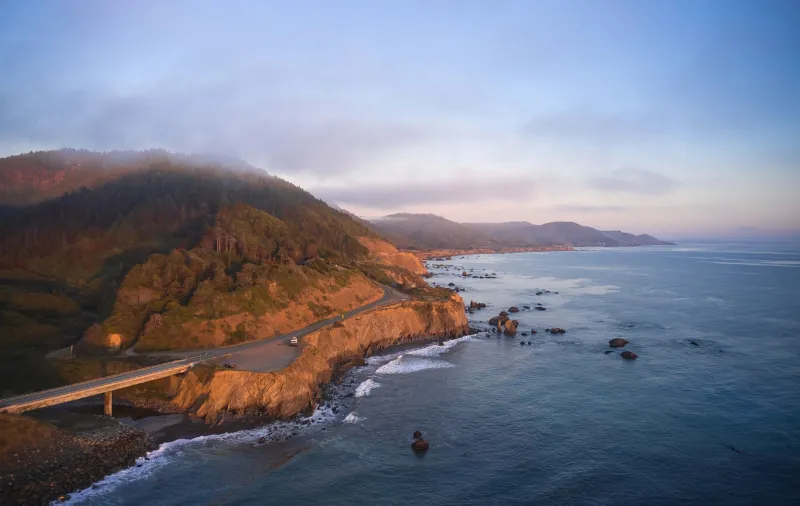
Ask any longtime TDU player about their first hour with the game and you'll hear some version of the same story. They got off the plane in Honolulu, got handed a car, and then... just drove. No timer. No rival breathing down their neck. No flashing arrow demanding they head to the next checkpoint. Just a road stretching out ahead of them and the realization that they could go wherever they wanted.
For a lot of American players in 2006, that moment felt genuinely radical.
The Racing Game Formula and Why It Was Getting Stale
By the mid-2000s, the traditional racing game structure had become pretty predictable. You started at the bottom of a tier system, you ran prescribed events in a locked order, you earned enough currency or XP to unlock the next tier, and you repeated the loop until the credits rolled. Gran Turismo, Forza, Need for Speed — all of them, despite their differences, operated on some version of this gated progression model.
There's nothing inherently wrong with that structure. It works. But it also treats the player as someone who needs to be led by the hand through a predetermined experience. Every race, every route, every rival encounter was authored. The game was telling you a story, and your job was to follow it.
TDU looked at that model and asked a different question: what if we just gave players a place and let them figure out what to do with it?
Hawaii as a Sandbox, Not a Set Piece
The decision to base TDU's world on Oahu's actual road network was more significant than it might seem on the surface. This wasn't a fictional city designed around race circuits. It was a real island with real geography — winding mountain roads, coastal highways, urban grids, and everything in between. Players weren't navigating a constructed race track disguised as a world. They were exploring a place.
That distinction matters because it changes the player's relationship with the environment. In a track-based game, the road exists to be raced on. In TDU, the road existed to be discovered. Finding a scenic overlook on the north shore, stumbling onto a stretch of highway that was perfect for high-speed runs, noticing a shortcut between two neighborhoods — these weren't scripted moments. They were yours.
Organic discovery is a powerful thing in game design, and TDU leaned into it hard.
The American Appetite for Agency
Here's where the cultural dimension gets interesting. The US gaming market has always responded well to player agency — the sense that your choices matter and your experience is your own. It's not a coincidence that open-world games as a genre found some of their biggest audiences in America. Grand Theft Auto, The Elder Scrolls, the early Fallout games — titles that handed the player a world and said "go figure it out" consistently performed well with American audiences.
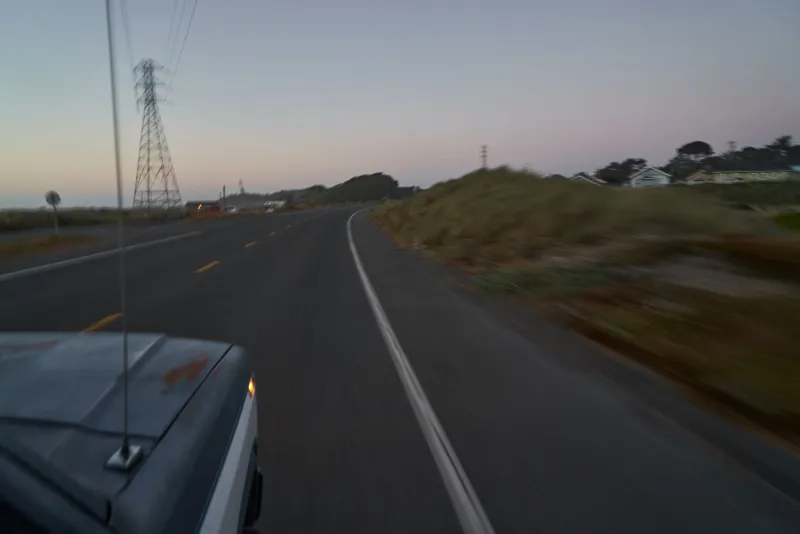
TDU tapped into that same appetite, but applied it specifically to car culture. And car culture in America isn't just a hobby — it's a deeply embedded part of national identity. The road trip is practically a rite of passage. The Sunday drive is a legitimate leisure activity. The idea of getting in a car with no particular destination, just to see where the road goes, is something American players understood at a gut level.
TDU made that fantasy interactive. The island was the road. The car was yours. The destination was optional.
Challenges Found, Not Assigned
One of TDU's smartest design choices was how it distributed its challenge content across the world rather than funneling players toward it. Speed cameras, roadside challenges, hitchhikers — these were scattered across Oahu for players to encounter naturally as they explored. You didn't have to hunt them down obsessively, but you'd stumble across them regularly enough that every drive had the potential to turn into something.
This is a fundamentally different relationship between player and content than the traditional racing game model. Instead of the game saying "here's today's challenge, complete it to progress," TDU was saying "go drive around, and interesting things will happen."
For players used to being pushed through content on a rail, that felt like a breath of fresh air. For players who'd grown up with the American road trip mythology, it felt like the game got them.
Why Linear Racing Games Couldn't Compete on This Turf
It's worth being fair here — linear racing games weren't doing anything wrong. Gran Turismo's approach to structured progression has its own satisfactions, and Forza Motorsport's event ladder gives players clear goals to chase. Different design philosophies serve different player needs.
But TDU identified a gap in the market that nobody had really addressed: the player who didn't necessarily want to win all the time. Who sometimes just wanted to drive a beautiful car through a beautiful place and see what was around the next corner. The player who found the journey more interesting than the destination.
In a genre almost entirely built around competition and completion, TDU gave those players somewhere to call home.
The Influence That Kept Moving
It's impossible to look at the Forza Horizon series — now one of the most popular racing franchises in the world — without seeing TDU's fingerprints. The festival setting, the emphasis on exploration, the organic challenge discovery, the sense that the world itself is the point rather than just the backdrop for races — all of it echoes what TDU was doing years earlier.
The Crew built an entire franchise around the open-road concept, scaling it up to a continent-spanning map. Even Gran Turismo 7 has incorporated more of a "living world" philosophy compared to earlier entries in the series.
The open-world racing game is now a recognized genre with a substantial audience. TDU didn't invent every element of it, but it demonstrated early and convincingly that there was a massive appetite for it — especially in the US market.
The Road Is Still Open
For the community that's grown up around this franchise, TDU's open-world philosophy isn't just a design feature worth analyzing. It's the reason many of us fell in love with these games in the first place. The freedom to explore, to discover, to drive without an agenda — that's the soul of what TDU has always been about.
In a gaming landscape that often feels increasingly structured and directed, that philosophy feels more relevant than ever. The road doesn't need a destination. Sometimes it just needs to be driven.