Your Garage, Your Rules: How TDU Redefined Virtual Car Ownership for a Generation of American Racers
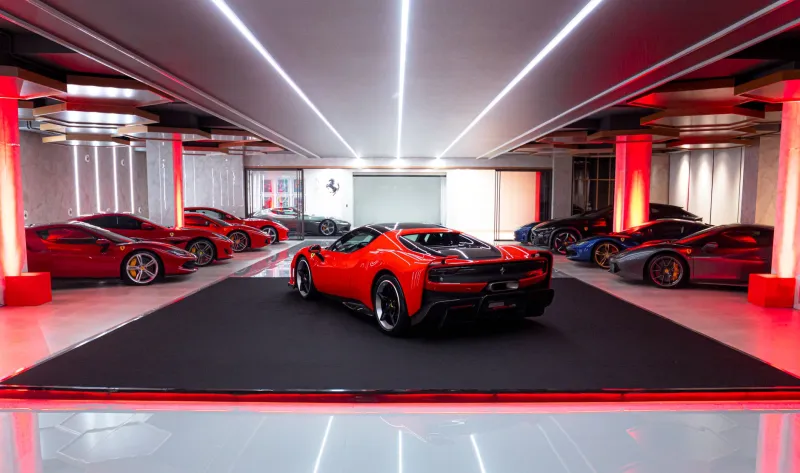
There's a specific feeling most American gamers over 30 can probably recall — the moment they pulled their freshly purchased Ferrari into their TDU garage, walked around it in third person, and thought, this actually feels like mine. Not a borrowed vehicle in a race menu. Not a stat block with wheels. An actual car, sitting in an actual space, waiting for wherever you decided to take it next.
That sensation wasn't accidental. It was the result of deliberate design choices by Eden Games that quietly rewrote the rulebook for what a racing title could be — and what players should expect from one.
Racing Games Before TDU: The Garage as an Afterthought
To appreciate what Test Drive Unlimited pulled off, it helps to remember where the genre was sitting in the mid-2000s. Gran Turismo had built its reputation on an enormous car list and obsessive mechanical detail, but the ownership experience was transactional — buy a car, tune it, race it, repeat. Forza Motorsport was carving out its own lane with impressive customization depth on the visual side. Need for Speed: Most Wanted gave you a story wrapped around your car, but the vehicle itself was ultimately a tool for progression.
None of them made you feel like you lived with your car.
TDU came out in 2006 on Xbox 360 and flipped that script entirely. The garage wasn't a loading screen feature. It was a destination.
The House, the Driveway, and the Emotional Investment
One of TDU's most underrated design decisions was tying your vehicle collection to physical real estate. You didn't just own cars — you owned properties, and those properties had garages with limited slots. That constraint forced players to make actual decisions about their fleet, the same kind of choices a real car enthusiast faces when space and budget collide.
When you bought a new house with a bigger garage, it genuinely felt like an upgrade. Not because of any stat boost or game mechanic reward, but because you could now see more of your collection displayed in a tangible, physical space. American players responded to that viscerally. The US has a deeply embedded car culture — garages aren't just storage, they're shrines. TDU understood that instinctively.
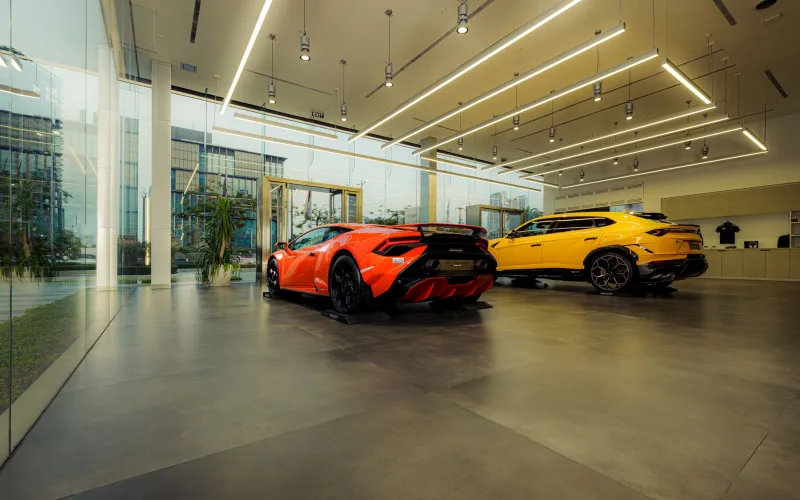
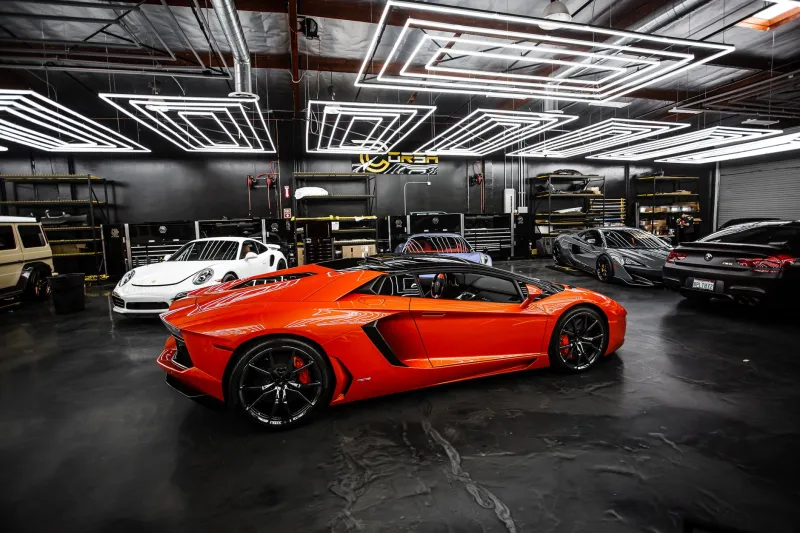
Walking your avatar through that garage, checking out the lines on a Lamborghini Murciélago next to your Dodge Viper, created an emotional attachment that no menu screen could manufacture.
Paint, Performance, and the Illusion of Personalization
Beyond the physical space, TDU invested heavily in making each car feel individually yours through customization. The paint system allowed players to dial in specific colors with a level of nuance that felt personal rather than cosmetic. You weren't picking "red" from a dropdown — you were choosing your red.
Performance upgrades added another layer. While TDU was never a hardcore simulation title, the ability to tune your vehicle and feel a tangible difference on Hawaii's roads gave players a sense of mechanical stewardship. You weren't just driving a car; you were maintaining and developing it over time.
Those systems weren't the deepest in the genre, but they didn't need to be. What they accomplished was something more important than raw depth — they created attachment. Players were reluctant to sell cars they'd customized. That reluctance is the clearest possible signal that virtual ownership had become real in some meaningful sense.
The Ripple Effect Across the Industry
It would be overstating things to claim TDU single-handedly invented modern racing game immersion. But its influence on competitor franchises is hard to dismiss once you start looking for it.
Forza Horizon — the franchise that arguably perfected the open-world racing formula — launched in 2012 with a festival hub, player housing elements, and an emphasis on lifestyle as much as lap times. The DNA there traces back through TDU's blueprint pretty clearly. The idea that a racing game should make you feel like you're living in its world, rather than visiting it for a few races, is a direct evolution of what TDU established.
Even Gran Turismo 7, with its garage display features and car collection philosophy, reflects a broader industry acknowledgment that players want to own their virtual machines, not just operate them.
The Crew franchise leaned into the open-world ownership angle hard. NFS titles started building more elaborate customization and lifestyle hooks. The fingerprints of TDU's design philosophy are scattered across a decade and a half of racing game development.
Why It Hit Different for American Players
The garage experience resonated with US gamers in particular for reasons that go beyond pure game design. America's relationship with the automobile is cultural mythology at this point — the open road, the dream car in the driveway, the weekend project in the garage. TDU tapped into that mythology and translated it into interactive form.
For players who might never own a Bugatti Veyron or an Aston Martin DB9 in real life, TDU's garage gave them a version of that fantasy that felt authentic rather than hollow. The cars were licensed. The island was real (Oahu's road network was mapped with impressive fidelity). The garage was a physical space you could walk around in.
That combination of authenticity and aspiration hit a nerve that pure racing games simply couldn't reach.
The Legacy Lives in the Expectations
Here's the thing about TDU's garage legacy: it's most visible not in the games it directly inspired, but in what modern players now consider baseline. The expectation that you should be able to customize your car visually and mechanically, that your collection should exist in some persistent, tangible form, that your vehicle should feel like yours rather than a borrowed asset — those expectations didn't exist in the same way before TDU made them feel normal.
When players complain that a modern racing game's garage feels "empty" or "soulless," they're measuring against a standard that Test Drive Unlimited helped establish nearly two decades ago.
That's a legacy worth understanding. And for the community here at TDUSC Origins, it's a big part of why this franchise still matters — not just as a nostalgic touchstone, but as a genuine innovator whose ideas are still shaping the roads we drive on today.