Paradise on Paper: How TDU's Exotic Locations Never Quite Lived Up to the Postcard
Let's be honest about something that the nostalgia filter tends to soften: Test Drive Unlimited's locations were, on paper, genuinely extraordinary. Hawaii. Ibiza. Two of the most culturally loaded, visually iconic places on the planet. Put a supercar in either setting and you've got the makings of a fantasy that sells itself. So why did so many players, especially by the time TDU2 landed, feel like they were driving through a screensaver rather than actually inhabiting a world?
This isn't a takedown. TDU earned its legacy, and this community exists precisely because that legacy matters. But earning a legacy doesn't mean every decision was correct, and the series' handling of its own settings is one of the most instructive case studies in open-world racing design — not because it succeeded, but because of exactly how and where it fell short.
When the Map Is the Feature
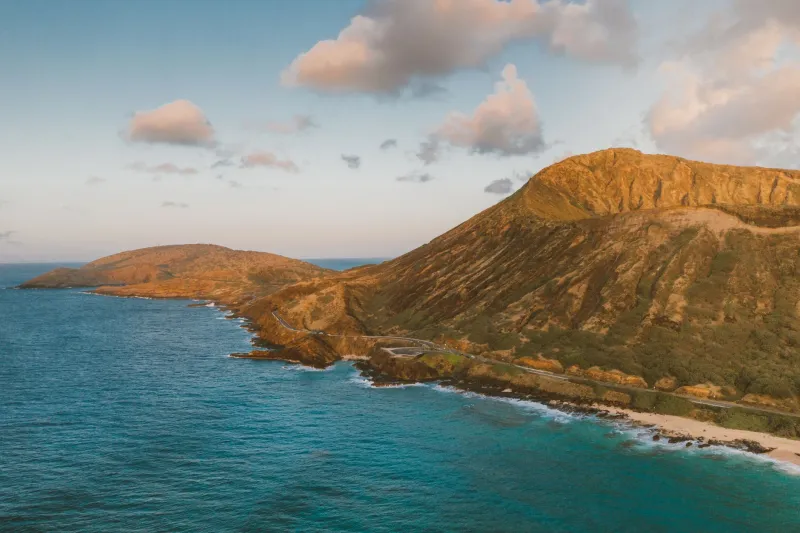
The original TDU's recreation of Oahu was legitimately remarkable for its time. The development team mapped real roads, real geography, and real distances in a way that made the island feel like a place rather than a race track. American players who had actually been to Hawaii reported a kind of double-take recognition when they drove certain stretches of coastal highway. That authenticity was the entire point.
But authenticity of geography isn't the same thing as authenticity of experience. TDU Oahu looked right. It didn't always feel right. The roadside detail was thin, the population was sparse, and the world had a curious blankness to it that became more noticeable the longer you played. The island was a shell — an extraordinarily detailed shell, but a shell nonetheless.
What the original game got away with was that the novelty of scale masked the shallowness of depth. In 2006, simply having that much drivable road in a racing game was enough to carry the experience. By the time TDU2 arrived in 2011 with two locations and a much higher baseline expectation, the same trick didn't land the same way.
Ibiza: The Promise and the Problem
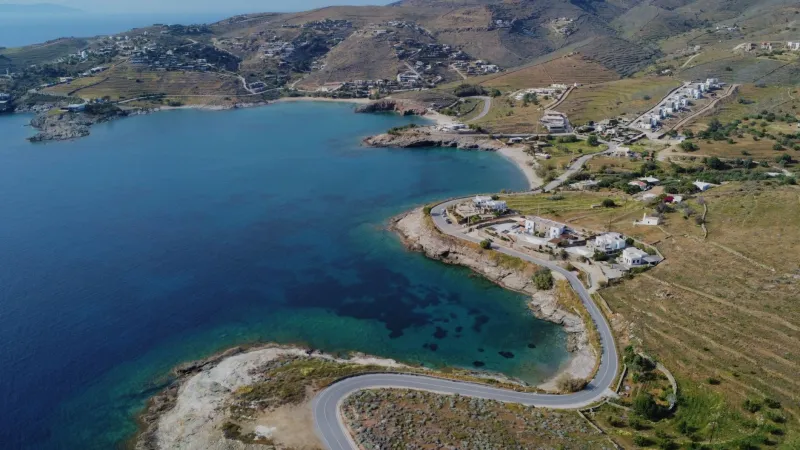
Ibiza was supposed to be the headline. A Mediterranean island synonymous with excess, nightlife, and European car culture — it was a natural fit for TDU's lifestyle-brand identity. The trailers made it look incredible. The concept made complete sense.
The execution was where things got complicated.
Ibiza in TDU2 felt, to a lot of players, like a geographic add-on rather than an integrated second world. The road network was smaller, the density of meaningful activities was lower, and the transition between the two islands never developed into the narrative or mechanical tension it needed to carry weight. You weren't choosing between Hawaii and Ibiza for reasons that mattered to your progression. You were just... switching.
That's the core problem: location, in TDU2, was treated as environment rather than identity. The game never asked Ibiza to mean something. It asked Ibiza to look like something. And for a game that had always sold itself on the idea that where you drove was as important as what you drove, that distinction was fatal.
The Integration Problem
Here's a useful comparison. Think about how the Pacific Coast Highway functions in American car culture. It's not just a road. It's a statement. Driving it in a convertible at sunset carries cultural weight that a technically superior road in a less storied location simply cannot replicate. The setting and the experience are inseparable.
The best moments in TDU's original Hawaii incarnation gestured at that kind of integration. There were stretches of coastal road where the combination of scenery, car audio, and sheer physical distance created something that felt genuinely cinematic. Those moments worked because the setting wasn't just visible — it was participatory.
TDU2 needed to build that relationship intentionally for both locations, and it didn't. The missions didn't feel rooted in their geography. The social spaces — the casino, the beach clubs — were conceptually interesting but mechanically disconnected from the driving experience that was supposed to anchor everything. You could remove Ibiza from TDU2 and replace it with a fictional island, and the game would have functioned almost identically. That's a damning thing to be able to say about a location that specific.
What the Franchise Was Actually Selling
Part of the issue is that TDU was always selling something more abstract than racing. It was selling aspiration. The cars, the houses, the locations — they were all props in a fantasy about a certain kind of life. That fantasy works best when the props feel coherent, when every element of the world reinforces the same emotional register.
Hawaii in the original game worked because the fantasy was focused. Rich American kid with a garage full of exotic cars, racing on island roads, buying beachfront property. That's a specific dream, and the game built a world around it with enough consistency that you could inhabit it.
Ibiza complicated the fantasy without deepening it. It added a second setting without adding a second story. The lifestyle aspiration got diluted rather than expanded, and players who had spent hundreds of hours learning to love the original island's geography had no compelling reason to transfer that affection to a new location that the game itself didn't seem to value particularly highly.
The Lesson That Racing Games Are Still Learning
Open-world racing games have continued to wrestle with this exact problem in the years since TDU2. The Forza Horizon series deserves credit for understanding, at least some of the time, that a location needs to be woven into the game's identity rather than just rendered in high fidelity. Horizon's Colorado, its British countryside, its Mexican festival setting — these weren't just backdrops. They were the premise. The events, the music, the culture of each game were built around a coherent vision of what that specific place meant.
That's the lesson TDU's location experiments offer, even in failure: a setting is only as powerful as the game's willingness to let it shape everything else. Geography should be destiny in an open-world racer. The roads should feel like they belong to the land. The events should feel like they couldn't happen anywhere else. The culture of the world should smell like the place it's set.
When a game treats its location like a skin rather than a skeleton, players feel it — even if they can't articulate exactly why. TDU veterans know that feeling. It's the slight disconnect between how beautiful the world looked and how inhabited it felt. Paradise on paper. Something quieter in practice.
Still Worth the Drive
None of this erases what TDU accomplished. Setting an open-world racer in real, recognizable geography was visionary, and the series deserves enormous credit for attempting something that most developers wouldn't touch. The ambition was real. The love for car culture was real. The attempt to translate the fantasy of exotic travel into interactive form was genuine and, in its best moments, genuinely successful.
But ambition and execution are different things. And the gap between TDU's locations as concepts and TDU's locations as living, breathing game worlds is worth examining honestly — not to diminish what the series achieved, but to understand why it still feels unfinished. Like a road that starts beautifully and just kind of trails off before it reaches the coast.